

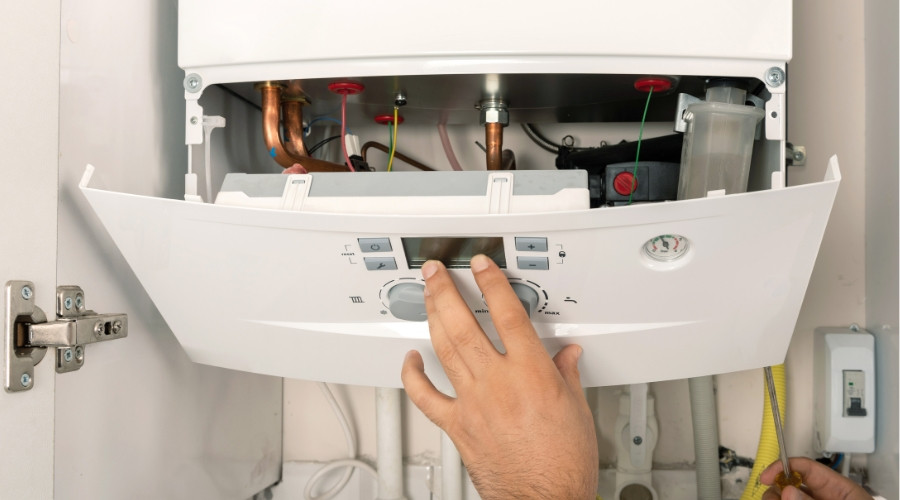
Boiler Basics to Help Keep a Home Warm and Efficient
Choosing the right boiler can feel overwhelming, but this guide is designed to clarify the confusion surrounding a home’s boiler heating system. Making an informed choice helps keep living spaces warm while keeping energy use in check. This post provides an overview of boiler types, common signs indicating the need for service, and practical steps to enhance efficiency and prolong equipment life. It also outlines where boiler installation, boiler repair, or boiler replacement makes the most sense. Let’s dive in and find reliable solutions that maintain indoor comfort year-round.
What Is a Boiler?
A boiler is a closed vessel that heats water or produces steam to deliver warmth through radiators, baseboard heaters, or radiant floors. Unlike a furnace that pushes heated air through ductwork, a boiler heating system circulates hot water or steam, which often results in even, draft‑free comfort. Many households find this approach quieter and more consistent, and it can support strong efficiency when properly sized and maintained.
Versatility is a key advantage. A modern boiler can be powered by natural gas, propane, oil, or electricity, giving property owners flexibility based on local availability and preferences. Because heat is transferred to surfaces and objects, rooms typically feel uniformly warm without the dry feeling associated with forced air. Another benefit is reduced dust circulation, as water‑based heat does not rely on ducts to move air around. Fewer moving parts than many air‑based systems can also mean a simpler maintenance profile.
When considering upgrades, professional boiler installation ensures correct sizing, safe venting, and optimal setup for long‑term performance. Newer equipment, matched to the application, can help improve efficiency and comfort. For aging systems with frequent issues, discussing boiler replacement alongside repair options can clarify both short‑ and long‑term costs.
Signs That Boiler Repair Is Needed
 A boiler works hard to keep spaces comfortable, and early attention to warning signs helps prevent breakdowns. Water pooling around the boiler should be addressed promptly by a qualified professional, as even small leaks may signal issues with valves, seals, or pressure controls. Corrosion or mineral buildup can contribute to these concerns if left unaddressed.
Unusual sounds—such as banging, whistling, or gurgling—often point to trapped air, scaling, low pressure, or circulation problems. A boiler heating system should operate quietly during normal cycles. Inconsistent temperatures from room to room or radiators that take longer than usual to warm can indicate circulation or control issues that call for boiler repair.
Rising utility costs without a clear cause may be another clue that efficiency has declined. Short‑cycling (frequent on‑off operation), pilot or ignition concerns, and frequent resets are all signals that professional diagnostic work is needed. When problems recur despite regular boiler maintenance, a technician can help compare the costs and benefits of continued boiler repair versus planning a boiler replacement to restore reliable performance and better efficiency.
How to Keep a Boiler Efficient
 Regular boiler maintenance is the most effective way to protect performance and minimize surprise repairs. During a professional service, a technician typically inspects the heat exchanger, checks safety controls, verifies venting, evaluates electrical connections, and cleans the burner assembly. Proper combustion setup and circulation checks help maintain steady operation and can support improved efficiency over the heating season.
Between visits, simple habits go a long way. Bleeding radiators to remove trapped air, monitoring system pressure, and keeping areas around the boiler clear all promote healthy operation. Addressing water quality with corrosion or scale control, when recommended, can protect internal components and heat transfer surfaces. Insulating exposed piping and balancing radiator valves can also help distribute heat more evenly throughout the space.
Knowing when to repair versus replace is part of long‑term planning. If an older unit requires frequent service or major components, evaluating boiler replacement may be cost‑effective over time. When installing new equipment, professional boiler installation ensures correct venting, controls, and piping—key factors that influence efficiency, reliability, and comfort. With consistent boiler maintenance and timely repairs, most systems deliver steady, dependable heat through many winters.
About Carmine’s Plumbing, Heating & Air Conditioning
Carmine’s Plumbing, Heating & Air Conditioning is a top-rated plumbing and HVAC company committed to providing expert workmanship and attention to detail from friendly, professional technicians. Call them today for flat-rate pricing on boiler services in Danbury, CT.
)
Distribution Links +
- https://smb.bogalusadailynews.com
- https://smb.andalusiastarnews.com
- https://smb.panolian.com
- https://smb.alexcityoutlook.com
- https://smb.americustimesrecorder.com
- https://smb.atmoreadvance.com
- https://smb.austindailyherald.com
- https://smb.dailyleader.com
- https://smb.vicksburgpost.com
- https://smb.claiborneprogress.net
- https://smb.clantonadvertiser.com
- https://smb.brewtonstandard.com
- https://smb.greenvilleadvocate.com
- https://smb.jessaminejournal.com
- https://smb.leaderpub.com
- https://smb.thesnaponline.com
- https://smb.windsorweekly.com
- https://smb.clemmonscourier.net
- https://smb.harlandaily.com
- https://smb.state-journal.com
- https://smb.thetidewaternews.com
- https://smb.winchestersun.com
- https://smb.farmvilleherald.com
- https://smb.salisburypost.com
- https://smb.smithfieldtimes.com
- https://smb.suffolknewsherald.com
- https://smb.cordeledispatch.com
- https://smb.prentissheadlight.com
- https://pr.boreal.org
- https://pr.timesofsandiego.com
- https://pr.chestercounty.com
- https://pr.ashlandtownnews.com
- https://pr.franklintownnews.com
- https://pr.hollistontownnews.com
- https://pr.naticktownnews.com
- https://pr.norwoodtownnews.com
- https://pr.greenvillebusinessmag.com
- https://pr.davisjournal.com
- https://pr.holladayjournal.com
- https://pr.midvalejournal.com
- https://pr.draperjournal.com
- https://pr.taylorsvillecityjournal.com
- https://pr.cottonwoodheightsjournal.com
- htv10.tv
- central.newschannelnebraska.com
- metro.newschannelnebraska.com
- southeast.newschannelnebraska.com
- northeast.newschannelnebraska.com
- plattevalley.newschannelnebraska.com
- panhandle.newschannelnebraska.com
- rivercountry.newschannelnebraska.com
- lifestyle.bryancountymagazine.com


 Boilers Are Easy on the Environment
 )
)
)
